.jpg)
The Liver as the Foundation of Hormone Health and Why Apple Cider Vinegar Supports the Process for Men and Women.
- thecrazyvinegarlady
- Jan 12
- 4 min read

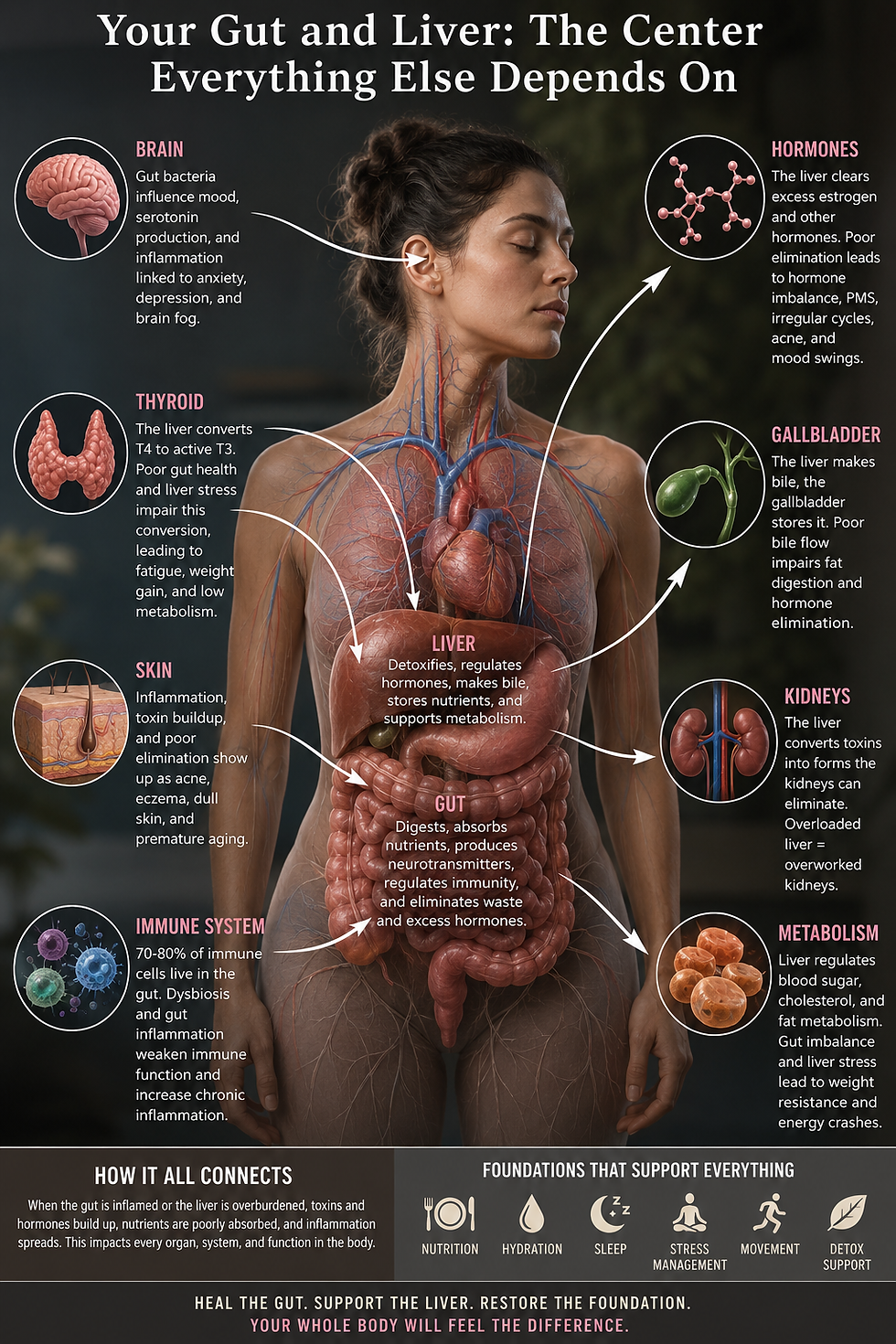
Hormone balance is often discussed as if it begins and ends with the ovaries, testes, adrenals, or thyroid. While these glands are important, hormones do not function properly without one central organ doing constant behind the scenes work. That organ is the liver. The liver acts as the regulator, processor, and clearinghouse for hormones in both women and men. Without healthy liver function, even well balanced hormone production can still result in symptoms.
Hormones are chemical messengers. They are released into the bloodstream, bind to receptors, and create a specific response in the body. Once that message is delivered, the hormone must be broken down and removed. If hormones linger longer than they should, they continue signaling when the body no longer needs them. The liver is responsible for making sure this does not happen.
In women, estrogen is one of the most liver dependent hormones. Estrogen is produced by the ovaries, adrenal glands, fat tissue, and even the gut. After estrogen has done its job, the liver converts it into metabolites that can be eliminated through bile and stool. This process is essential for cycle regularity, emotional stability, and overall hormonal balance. When liver function slows, estrogen clearance becomes inefficient. Instead of leaving the body, estrogen can be reabsorbed through the gut and recirculated. This contributes to symptoms commonly associated with estrogen dominance, including heavy or painful periods, bloating, breast tenderness, headaches around the menstrual cycle, mood swings, anxiety, and stubborn weight gain.
Progesterone is also influenced by liver health, though indirectly. Progesterone is often referred to as the calming hormone, but it is highly sensitive to stress. When the liver is under strain, blood sugar becomes less stable and cortisol output increases. Elevated cortisol shifts the body into a stress dominant state, which reduces progesterone availability. This imbalance can worsen PMS, disrupt sleep, and make cycles feel more symptomatic even when estrogen levels appear normal.
The liver also plays an important role in thyroid hormone function, which affects female reproductive health. Thyroid hormones regulate metabolism, energy production, ovulation, and menstrual regularity. The liver helps convert thyroid hormone into its active form and assists in clearing excess inactive hormone. If liver function is compromised, this conversion process may slow, contributing to fatigue, cold sensitivity, irregular cycles, and difficulty maintaining a healthy weight.
In men, the liver is equally important for hormone balance. Testosterone must be carefully regulated to support muscle mass, energy, libido, mood, and metabolic health. The liver helps metabolize excess testosterone and prevents excessive conversion of testosterone into estrogen. When liver function is impaired, testosterone levels may become unstable. This can result in fatigue, reduced strength, lower motivation, increased abdominal fat, and changes in mood. In some cases, estrogen levels may rise relative to testosterone, further disrupting male hormone balance.
Cortisol, the primary stress hormone, is another key hormone processed by the liver in both men and women. The liver helps deactivate cortisol after it has served its purpose. When liver function is strained, cortisol may remain elevated longer than necessary. Chronically elevated cortisol contributes to inflammation, blood sugar instability, sleep disruption, and suppression of reproductive hormones. Over time, this stress driven hormone pattern can affect nearly every system in the body.
Blood sugar regulation is one of the liver’s most important contributions to hormone balance. The liver stores glucose as glycogen and releases it between meals to keep blood sugar steady. When blood sugar fluctuates too widely, the body compensates by increasing cortisol output. Stable blood sugar reduces stress signaling and creates a hormonal environment that supports progesterone, testosterone, and thyroid hormones. A well functioning liver is essential for maintaining this balance.
Bile production is another critical liver function that directly affects hormones. Bile is produced by the liver and stored in the gallbladder. It helps digest fats and absorb fat soluble vitamins, but it also serves as a primary route for eliminating hormone metabolites. When bile flow is sluggish, hormone byproducts are not removed efficiently. This increases the likelihood that they will be reabsorbed in the gut and reenter circulation. This is why gut health and liver health are inseparable when addressing hormone concerns.
Modern environmental exposure places additional demand on the liver. Many everyday chemicals found in plastics, synthetic fragrances, pesticides, and personal care products act as endocrine disruptors. These compounds can mimic estrogen in the body and interfere with normal hormone signaling. The liver works continuously to neutralize and eliminate these substances. When the toxic load becomes too high, hormone balance can suffer even if hormone production itself is normal.
Apple cider vinegar supports liver function through several complementary mechanisms. Its mild acidity helps stimulate digestive secretions, including stomach acid and bile. Improved bile flow supports the elimination of used hormones and reduces their reabsorption in the gut. This is especially important for estrogen clearance in women and for maintaining balanced androgen levels in men.
Apple cider vinegar also supports blood sugar stability when used appropriately. By helping slow glucose absorption and improve insulin sensitivity, it reduces the need for cortisol driven blood sugar correction. Lower cortisol demand supports progesterone, testosterone, and thyroid hormone balance while reducing overall stress on the liver.
Gut health is another important pathway through which apple cider vinegar supports hormone balance. A healthier digestive environment improves elimination and reduces the activity of bacteria that can reactivate hormone metabolites. When hormones leave the body efficiently, the liver does not have to repeatedly process the same compounds.
Apple cider vinegar does not force detoxification or overstimulate the liver. Instead, it supports the conditions the liver needs to function effectively. This gentle support allows the liver to regulate hormones more efficiently without adding additional stress to the system.
Hormone balance is not achieved by targeting a single hormone or gland. It is the result of systems working together in harmony. The liver sits at the center of this process for both men and women, influencing estrogen, progesterone, testosterone, cortisol, and thyroid hormones every day.
By supporting liver function through stable blood sugar, proper digestion, reduced chemical exposure, and tools such as apple cider vinegar, the body is given the opportunity to restore balance naturally. When the liver is supported, hormones no longer need to be chased or forced into balance. They begin to regulate themselves as the body was designed to do.


Comments